Similarity of Chocolate Marks Sustained TTAB Opposition
CHOCOVA // CHOCOVIAR

• Core Issue: Likelihood of confusion analysis under DuPont factors regarding the marks CHOCOVA and CHOCOVIAR for identical chocolate-based goods.
Overview
The case centered on whether the mark CHOCOVA, intended for use on a variety of chocolate products, so resembled the registered marks CHOCOVIAR and CHOCOVIAR 75% as to cause consumer confusion.
Both parties were deficient in their evidence, resulting in several factors being found neutral rather than in favor of either side's position. For example, the Opposer did not provide context-driven evidence to establish commercial strength or fame. Similarly, the Applicant’s failure to introduce evidence supporting its claims of a "crowded field" or "conceptual weakness" resulted in those arguments being dismissed as mere attorney argument.
Background
The Applicant filed an application seeking to register the mark CHOCOVA in standard characters for various chocolate products, including chocolate bars and chocolate-based beverages in International Class 30.
Venchi S.p.A. opposed the registration on the grounds of priority and likelihood of confusion under Section 2(d) of the Trademark Act. The Opposer relied on its ownership of a registered standard character mark CHOCOVIAR and a registered design mark containing the term CHOCOVIAR 75%.
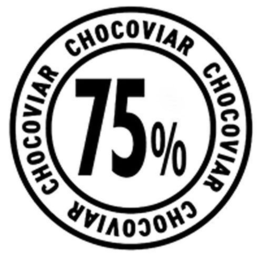
These registrations cover an extensive list of goods in Class 30, including chocolate bars, cocoa-based beverages, and chocolate-based beverages.
Analysis
In its DuPont analysis, the Board focused on Opposer’s pleaded standard character mark, CHOCOVIAR, because it is closest to Applicant’s CHOCOVA mark. The Board noted that a finding of a likelihood of confusion as to the CHOCOVIAR mark would alleviate the need to analyze the composite CHOCOVIAR 75% mark. Conversely, if the Board did not find a likelihood of confusion as to these marks, it would not find a likelihood of confusion as to the composite mark either.
Entitlement & Priority
Regarding entitlement to a statutory cause of action (formerly referred to as standing), the Board found that the Opposer successfully proved its right to maintain the action. By proving ownership of the pleaded registrations for CHOCOVIAR and CHOCOVIAR 75%, the Opposer met this threshold requirement. On the issue of priority, the Board determined that because the Opposer made its valid and subsisting registrations part of the record and the Applicant did not counterclaim to cancel them, priority was not at issue.
DuPont #2: Similarity or Dissimilarity of the Goods
In evaluating the second DuPont factor, the Board focused on the identifications set forth in the application and the cited registration. The Board emphasized that the relevant inquiry focuses on the goods and services described in the application and registration, rather than real-world conditions. Upon comparison, the Board found that both the application and the CHOCOVIAR registration identified "chocolate bars" and "chocolate-based beverages."
The Board noted that the parties’ identified goods are "in-part identical." This finding was further bolstered by the Applicant’s own discovery responses, in which it admitted that its chocolate-based beverages and chocolate bars are identical to those identified in the Opposer’s pleaded registrations. Consequently, the Board concluded that this factor weighed strongly in favor of a likelihood of confusion.
DuPont #3: Similarity of Established Trade Channels and Classes of Consumers
For the third DuPont factor, the Board considered the channels of trade and the consumers likely to encounter the goods. Because neither the Opposer nor the Applicant limited their channels of trade or classes of consumers in their identifications, a presumption of overlap applies. The Board noted that, absent restrictions in the application and registration, goods and services are presumed to travel in the same channels of trade to the same class of purchasers.
Since the goods were found to be in-part identical, the Board presumed they would be offered in the same trade channels. Therefore, the Board concluded that this factor also weighed heavily in favor of a likelihood of confusion.
DuPont #4: Conditions of Sale and Nature of Purchasers
The fourth DuPont factor requires an analysis of whether the products are subject to "impulse" purchases or careful, sophisticated purchasing. The Applicant argued that its goods were positioned differently than the Opposer's, claiming that "Opposer’s evidence emphasizes premium, indulgent, and luxury-oriented products," whereas Applicant’s goods emphasized "composition and functional characteristics."
The Board dismissed this distinction, noting that the identifications for "chocolate bars" and "chocolate-based beverages" are unrestricted as to pricing or quality. Therefore, the Board assumed these products include both "expensive and inexpensive varieties," including those "purchased by members of the general public on impulse in the grocery store check-out." Following the requirement to consider the "least sophisticated consumer in the class," the Board found that the general public would not necessarily exercise a high degree of care when purchasing chocolate. Thus, this factor weighed in favor of finding a likelihood of confusion.
DuPont #5: Strength and Fame of the Opposer’s Mark
The fifth DuPont factor involves the commercial strength and fame of the prior mark. The Opposer submitted a testimony declaration from the Chief Financial Officer of its U.S. subsidiary to argue that CHOCOVIAR is a famous mark entitled to a broad scope of protection. The evidence included details regarding Venchi's 140-year history, the opening of U.S. "ChocoGelateria" boutiques, and press coverage in publications like Vogue and Forbes.
However, the Board provided a detailed critique of this evidence. It noted that much of the press exposure featured the house brand "Venchi" rather than the specific "CHOCOVIAR" mark. For example, of the articles submitted, "only one mentions the CHOCOVIAR mark, and that mention is somewhat buried in text." Additionally, the Board found the financial data lacking in context. While U.S. sales of CHOCOVIAR products increased from $5,755 in 2020 to $969,064 in 2024, the Board observed that "we have no sense of what portion of the chocolate market $1M in sales comprises."
The Board also questioned the advertising spend, noting that the annual advertising totals (increasing to $927,207 in 2024) appeared to be for the Venchi brand as a whole rather than CHOCOVIAR specifically. Ultimately, the Board held that there were "too many deficiencies in Opposer’s evidence" to find the mark famous, rendering this factor neutral.
DuPont #6: Number and Nature of Similar Marks in Use
Under the sixth DuPont factor, the Board addressed the Applicant’s argument that the "CHOCO-" formative portion of the mark is "weak and entitled to a narrow scope of protection" because it is a commonly understood reference to chocolate. The Board noted that while this argument may have merit conceptually, the Applicant "offered no evidence in support of this assertion."
The Board reiterated the principle that "attorney argument is no substitute for evidence." Because the Applicant failed to introduce third-party registrations, dictionary definitions, or evidence of third-party use, it was unsuccessful in diminishing the scope of protection of the Opposer's mark. As a result, the sixth DuPont factor was also found to be neutral.
DuPont #1: Similarity of the Marks
The final factor analyzed was the similarity of the marks in their entireties. The Board compared CHOCOVA and CHOCOVIAR, noting that both marks share the identical leading six letters: "CHOCOV-". The Board found that "the first and visually largest part of both marks... is identical."
The Applicant argued that the marks have "differing endings, structure, sound, appearance, and connotation," and that CHOCOVIAR evokes the concept of "chocolate caviar" while CHOCOVA is "arbitrary." The Board, however, was not convinced that the different terminal portions were sufficient to overcome the similarity. The Board emphasized that "the degree of similarity necessary to support a conclusion of likely confusion declines" when the goods at issue are identical.
The Board concluded that the marks, when viewed as a whole, are "similar in appearance, sound, meaning, and overall commercial impression." The shared suggestive connotation of "CHOCO-" combined with the identical "V" following it created a general impression that an ordinary consumer would likely confuse.
Board’s Decision
The Board sustained the opposition. In balancing the relevant DuPont factors, the Board found that the second, third, and fourth factors weighed heavily in favor of a likelihood of confusion. The first factor, regarding the similarity of the marks, also weighed in favor of the Opposer. Although the fifth and sixth factors were neutral due to evidentiary deficiencies on both sides, the Board determined that the cumulative effect of the evidence favored a finding of confusion.
In my humble opinion, the Applicant fumbled its crowded field argument and the potential weakness of the shared prefix "CHOCO" by failing to substantiate its claims with third-party registrations or marketplace evidence. Instead, the argument was quickly dismissed as mere attorney argument.