Slaying a 2(d) Refusal: Commercial Impression Outweighs Related RPG Manuals and Board Games
DRAGONSLAYER || DRAGON SLAYERS CONQUERORS OF DARKNESS REV.12:7-11

• Core Issue: Whether role-playing game manuals and board games are related; and whether the Applicant's mark DRAGONSLAYER so resembles the registered composite mark, which includes the words "DRAGON SLAYERS," as to cause confusion when used in connection with the identified goods.
Overview
The Trademark Trial and Appeal Board reversed the Examining Attorney's refusal to register the Applicant's mark, DRAGONSLAYER. While the Board found that the goods, role-playing game manuals and board games, were closely related and shared overlapping trade channels, the decision ultimately turned on the dissimilarity in the marks' commercial impressions.
Background
The Applicant filed an application seeking to register DRAGONSLAYER in standard characters for role-playing game equipment, namely, downloadable game book manuals in International Class 9 and printed game book manuals in International Class 16.
The Examining Attorney refused registration under Section 2(d), citing a prior registration DRAGON SLAYERS CONQUERORS OF DARKNESS REV.12:7-11 with design. The cited registration covers "Board games and equipment sold as a unit for playing boardgames" in International Class 28.
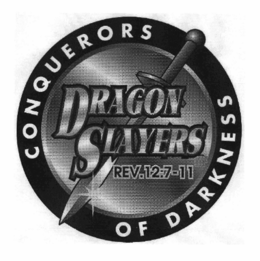
Following a final refusal, the Applicant appealed to the TTAB.
How the Board Analyzed the DuPont Factors
Several evidentiary issues arose during the appeal when the Applicant attempted to introduce new declarations and lists of third-party registrations that were not part of the record during the initial prosecution. The Board sustained the Examining Attorney's objections to this late-filed evidence, strictly adhering to Trademark Rule 2.142(d).
Consequently, the Board’s analysis was confined to the facts established during the ex parte examination.
DuPont #2: Similarity or Dissimilarity and Nature of the Goods
The Board first assessed the relatedness of the goods identified in the application and the cited registration. The Applicant sought registration for role-playing game book manuals (Classes 9 and 16), while the Registrant’s goods were board games and equipment (Class 28). To bridge the gap, the Examining Attorney submitted a variety of evidence, including several articles demonstrating a close relationship between these products.
The Board noted that the Applicant’s identification for "role-playing game book manuals" contained no restrictions on the format the games might take. Meanwhile, the evidence submitted by the Examining Attorney showed that many games are classified as both board games and role-playing games. Furthermore, the Board found that instruction manuals are considered essential equipment for both categories of games, and the cited registration included "equipment" in its identification. A third-party retail website further supported this finding by featuring role-playing game handbooks and manuals directly alongside traditional board games.
The Applicant attempted to distinguish the goods by providing detailed explanations of how role-playing games differ from traditional board games like chess or checkers. However, the Board dismissed this argument as mere "attorney argument," since the Applicant failed to provide properly introduced evidence to support these distinctions.
The Applicant also argued that the goods are distinguishable based on present business practices, namely, the Applicant's fantasy theme versus the Registrant's Christian theme. The Board rejected this market reality argument as well, noting:
"Registrability must be determined ‘on the basis of the identification of goods set forth in the application regardless of what the record may reveal as to the particular nature of an applicant’s goods.’"
Because the goods are legally overlapping and unrestricted, this factor weighed in favor of a likelihood of confusion.
DuPont #3: Similarity of Channels of Trade and Classes of Customers
When a trademark application and a cited registration do not limit how goods are sold or to whom, the Board must presume they travel through "all normal trade channels to all the normal classes of purchasers." Although the record in this case lacked extensive evidence regarding specific trade channels, the Board pointed out that third-party websites commonly sell role-playing games, board games, and game manuals simultaneously.
The Applicant even conceded that "there is some overlap between consumers of role playing games and consumers of board games." Still, the Applicant tried to argue in its brief that its goods were restricted to "specialty role playing game retailers" while the Registrant’s were limited to "religious stores." The Board quickly rejected this argument, reiterating that it could not consider marketing limitations not explicitly reflected in the identification of goods. Consequently, the Board found that the trade channels and customer classes likely overlap, weighing this factor in favor of a likelihood of confusion.
DuPont #4: Consideration of Consumer Sophistication
The Applicant asserted that its customers are "typically dedicated hobbyists" who are well-informed and familiar with product distinctions. The Board, however, found no evidentiary basis for this assertion, as the Applicant's supporting declarations had been excluded as untimely. Instead, the limited evidence in the record suggested the opposite, showing that role-playing games include products intended for "families with children" and those aged "14 and up." Because the record could not support a finding of high purchaser sophistication, the Board deemed this factor neutral.
DuPont #6: The Number and Nature of Similar Marks on Similar Goods
The Applicant urged the Board to consider third-party registrations as proof that the cited mark was conceptually weak. Specifically, the Applicant provided a list of marks containing "DRAGONS," "DUNGEON" or "DUNGEONS."
The Board rejected this argument on multiple grounds. First, the list was submitted for the first time in the appeal brief and was not part of the prosecution record. Second, the Board noted that "lists of registrations are insufficient to make the registrations of record." Finally, even if the list were considered, the Board found that the existence of only three relevant registrations fell "well short of making a dent" in the conceptual strength of the mark. Therefore, this factor was also deemed neutral.
DuPont #1: Similarity of the Marks in Appearance, Sound, Connotation, and Commercial Impression
The Examining Attorney argued that the marks were confusingly similar because the Applicant's mark, DRAGONSLAYER, is nearly identical to the "DRAGON SLAYERS" portion of the cited mark. The examiner contended that "DRAGON SLAYERS" was the dominant portion of the cited mark and that consumers would view the Applicant’s mark as a "shortened form" of the Registrant’s mark.
The Board, however, disagreed with characterizing "DRAGON SLAYERS" as the dominant element. In its analysis, the Board described the registered mark as a "much busier mark," featuring:
- A dark circular border containing the phrase "CONQUERORS OF DARKNESS";
- A metallic-looking circular disc;
- The terms "DRAGON SLAYERS" and "REV. 12:7-11"; and
- A prominent, glinting sword design that partially obscures the text.
The Board observed that "CONQUERORS OF DARKNESS" possesses a significant degree of prominence and that the Biblical reference "REV. 12:7-11" adds a specific religious connotation that distinguishes it from the Applicant's mark. Phonetically, the Board found that the registered mark "sounds quite different" due to its overall length. Visually, the registered mark is much longer and far more complex.
The Board concluded that the differences in the marks, resulting from the complexity and the "busy" nature of the cited registration, far outweighed the similarity of the shared literal term. Consequently, this factor weighed heavily against a likelihood of confusion.
Board’s Decision
The TTAB reversed the refusal to register the mark DRAGONSLAYER. In weighing the factors, the Board acknowledged that while the relatedness of the goods and the overlap in trade channels favored a likelihood of confusion, the final determination is not a mechanical tally of factors. Instead, the Board held that the distinct commercial impressions created by the two marks were the "more important fact" in this case.
In conclusion, the complexity of the Registrant's mark, including its design elements and additional literal phrases, prevented a finding that the Applicant's mark so resembled it as to be likely to cause confusion.
Although the Board ultimately decided in the Applicant's favor, the Applicant likely would have had a much stronger case, and a more favorable determination across several other DuPont factors, had its evidence been properly submitted.
For example, the Applicant attempted to submit four affidavits and a list of third-party registrations directly with its appeal brief. Because this was done after the examination closed, all of it was excluded. To introduce new evidence during an appeal, the proper procedural mechanism is to file a request to suspend the appeal and remand the application back to the Examining Attorney for further examination. Failing to follow this procedure renders any new evidence inadmissible, leaving the Board to rely strictly on what may be a very limited prosecution record.
Beyond the timeliness of evidence submission, the Board also provided a clear directive for practitioners when introducing Internet evidence:
- You must provide: An actual image (screenshot) of the webpage, the date the page was accessed, and the complete URL.
- Why it matters: Simply providing hyperlinks in an appeal brief is legally insufficient because the content at those links can change at any time.
By keeping these procedural rules in mind, practitioners can ensure their client’s evidence actually makes it into the record where it can do some good.