How a Unitary Mark and Elevated Consumer Care Reversed a 2(d) Refusal
LADY MOSS BOSS // LADYBOSS

• Core Issue: Whether a likelihood of confusion exists under Section 2(d) of the Trademark Act between a composite mark featuring a stylized portrait and the words LADY MOSS BOSS and a cited registration for the standard character mark LADYBOSS.
Overview
This case centered on a likelihood of confusion analysis between an application for a complex composite mark used for sea moss products and a registered word mark for dietary supplements. The Board rejected the Examining Attorney’s attempt to dissect the Applicant's mark into its literal components, finding instead that the visual and phonetic elements worked together to create a specific identity that differed from the general "LADY BOSS" persona suggested by the cited registration.
Furthermore, the Board acknowledged that consumers of health and wellness products, such as dietary supplements and algae-based foods, typically exercise a higher degree of care during their purchasing decisions, a factor that further mitigated the risk of confusion.
Background
The Applicant, Yolee’s Meal Prep LLC, filed an application, seeking to register a composite mark on the Principal Register for various sea moss products in International Class 29.
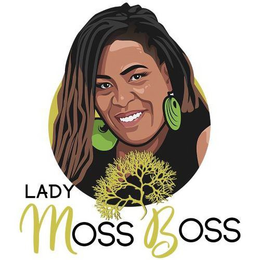
The Trademark Examining Attorney refused registration under Section 2(d) of the Trademark Act, citing a likelihood of confusion with the registered mark LADYBOSS. The cited mark is a standard character mark used for dietary supplements in International Class 5.
Following the final refusal, the Applicant appealed to the Trademark Trial and Appeal Board.
How the Board Analyzed the DuPont Factors
DuPont #2: Similarity or Dissimilarity of the Goods
According to the Examining Attorney's provided definition, a dietary supplement is any product containing vitamins, herbs, enzymes, or other ingredients taken orally to supplement the diet, typically packaged as pills, capsules, liquids, or powders. Sea moss was defined as a type of red algae. Because the Registrant’s identification for "dietary supplements" was broad and entirely unrestricted, the Examining Attorney argued it could encompass any type of supplement, including those made from sea moss.
The Applicant contended that the goods were non-competitive and served different health objectives, such as weight loss versus immune system support. However, the Board dismissed these arguments, stating that the inquiry must focus on the goods as identified in the application and registration, rather than extrinsic evidence of real-world use. Because the Registrant’s identification had no limitations, the Board assumed it included supplements of all types offered to a full range of consumers.
To establish relatedness, the Examining Attorney submitted evidence from 26 websites showing companies that offer both sea moss products and dietary supplements under a single mark, along with five third-party registrations. The Applicant criticized this evidence as de minimis, arguing that it represented a tiny fraction of the dietary supplement market.
The Board rejected this critique, noting that the USPTO is only required to provide substantial evidence to support its prima facie case, which the Examining Attorney had done. Because the Board found the evidence sufficient to show these goods are of a type that may emanate from a single source, this factor weighed in favor of a likelihood of confusion.
DuPont #3: Similarity or Dissimilarity of Established Trade Channels and Classes of Consumers
Regarding trade channels and consumers, the Board noted that neither the application nor the cited registration contained restrictions or limitations. Therefore, the goods were presumed to travel in all normal channels of trade and to be sold to all prospective purchasers. The Board identified the relevant consumers as general consumers interested in health and wellness.
The Examining Attorney argued that the trade channels overlapped, pointing to internet evidence that specialty health product retailers and manufacturers offer both sea moss and dietary supplements. The Board agreed, finding that purchasers would encounter both types of goods on the same websites. This overlap in trade channels and the similarity of the consumer bases led the Board to conclude that this factor weighed in favor of a likelihood of confusion.
DuPont #4: Conditions of Sale and Degree of Care
The Applicant argued that dietary supplements are not bought on impulse because they affect bodily functions and weight loss. To support this, the Applicant provided evidence that the Food and Drug Administration (FDA) advises consumers to consult healthcare professionals before using supplements and noted that supplements are subject to specific FDA labeling requirements.
While the Examining Attorney argued that there was insufficient evidence to establish a specific degree of care, the Board sided with the Applicant. Citing prior precedent, the Board found that purchasers of nutritional supplements are likely to exercise special care in making their product choices because the products are related to health. Even though the pricing evidence in the record showed a range of prices, the Board determined that the nature of the goods themselves necessitated a more careful purchasing decision. This factor weighed slightly against a likelihood of confusion.
DuPont #1: Similarity or Dissimilarity of the Marks
The Examining Attorney focused on the literal portion of the Applicant’s mark, arguing that "LADY MOSS BOSS" was not unitary and that the design element merely depicted the wording.
The Board disagreed, finding the Applicant’s mark unitary. The portrait of the woman and the words "LADY MOSS BOSS" were so integrated that they created a single, distinct commercial impression. The Board observed that the prominent, lifelike design of the woman at the top of the mark first draws the eye, creating a visual impression entirely different from the standard character mark LADYBOSS. Additionally, the word "MOSS" was positioned between "LADY" and "BOSS" in the Applicant's mark, further distinguishing the appearance.
In terms of sound, the Board noted that while both marks shared the words "LADY" and "BOSS," the intervening word "MOSS" and the rhyming nature of "MOSS BOSS" in the Applicant's mark created meaningful dissimilarities in sound and cadence.
The connotation and commercial impression were also found to be distinct. The Board reasoned that the Applicant’s mark connotes a specific person, the "Moss Boss" depicted in the portrait, rather than a generalized "Lady Boss." The Board stated that the specific connotation of the Applicant’s mark as identifying a particular individual was not the same as the registered mark’s reference to a lady boss in general. Because the marks viewed in their entireties were dissimilar in appearance, sound, and connotation, the Board concluded that this factor weighed strongly against a likelihood of confusion.
Board’s Decision
The TTAB reversed the Section 2(d) refusal to register the Applicant’s mark. In weighing the DuPont factors, the Board acknowledged that while the similarity of the goods and trade channels favored a likelihood of confusion, the dissimilarities between the marks and the higher degree of consumer care outweighed those factors.
The Board emphasized that the first DuPont factor played a dominant role in the final determination. Even though the goods were related and sold through similar channels, the marks themselves were sufficiently different in their overall commercial impression that confusion as to the source of the goods was unlikely.
This is yet another case where the Board found a dissimilarity of marks when one mark connotes a specific, depicted person as compared to a general designation. Here are a few more: