Commercial Weakness Overcomes Relatedness of Services and Similarity of Marks
SYCAMORE GROWTH GROUP // SYCAMORE CAPITAL

• Core Issue: Whether the trademark SYCAMORE GROWTH GROUP for tax consulting services is likely to cause confusion with the registered marks SYCAMORE CAPITAL and a related tree-design mark for financial management and investment advice services under Section 2(d) of the Trademark Act.
Overview
The Applicant sought to register the standard character mark SYCAMORE GROWTH GROUP for tax consulting services. The Examining Attorney refused registration, citing a likelihood of confusion with two existing registrations for SYCAMORE CAPITAL, which covered traditional financial services like investment advice and mutual fund management. While the Board initially found that the services were related and the marks shared significant similarities, the decision ultimately hinged on the evidentiary showing of the cited mark's weakness. This case serves as a reminder that a comprehensive evidentiary record of third-party use showing commercial weakness can overcome even a strong prima facie case of relatedness and mark similarity.
Background
The Applicant, Sycamore Growth Group, LLC, filed an application seeking to register the mark SYCAMORE GROWTH GROUP in standard characters for tax consulting services in connection with identifying tax credits in International Class 35. The word "GROUP" was disclaimed.
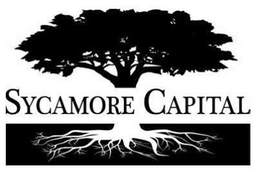
The Trademark Examining Attorney refused registration under Section 2(d) of the Trademark Act, asserting that the mark was likely to be confused with two registrations held by the same entity: SYCAMORE CAPITAL, a standard-character mark, and SYCAMORE CAPITAL with design, a composite mark consisting of a tree design with roots within a rectangular border, bisected by the words SYCAMORE CAPITAL.
After the Examining Attorney denied the request for reconsideration, the appeal proceeded to the Board for a final determination.
How the Board Analyzed the DuPont Factors
The Board focused its analysis on the standard character mark SYCAMORE CAPITAL. If confusion is likely between this mark and Applicant’s mark for the identified services, there is no need for the Board to consider whether there is a likelihood of confusion with the composite word and design mark. Conversely, if there is no likelihood of confusion between Applicant’s mark and the cited standard-character mark, then there would be no likelihood of confusion with the composite word and design mark.
DuPont #2: Similarity or Dissimilarity of the Services
The Board first examined the relationship between the Applicant’s tax consulting services and the Registrant’s financial management and investment advice services.
The Applicant argued that although both sets of services belonged to the broad financial field, they were highly disparate. Specifically, the Applicant contended that tax services were distinct from traditional financial services such as mutual fund investment. However, the Examining Attorney argued that the services were of a kind that frequently emanated from a single source.
To support this position, the Examining Attorney provided over twenty-five use-based, third-party registrations identifying both tax consulting and financial planning services under a single mark. The Board noted that these registrations were relevant to show that the services were of a type that consumers might expect to come from the same entity.
Furthermore, the Examining Attorney introduced evidence from seven third-party websites demonstrating that tax and financial services are inherently linked. The Board found this evidence compelling, concluding that the services were complementary and related for the purposes of the likelihood of confusion analysis.
DuPont #3: Similarity or Dissimilarity of Established Trade Channels
Regarding the third DuPont factor, the Board observed that neither the Applicant’s services nor the Registrant’s services contained limitations as to trade channels or classes of consumers. Consequently, the Board was required to presume that the services were offered in all ordinary channels to all usual classes of purchasers. The Board found that the website evidence previously discussed, which showed firms offering both tax and financial services together, supported a finding that the services travel in overlapping channels and are offered to the same consumers. This factor weighed in favor of a finding of likelihood of confusion.
DuPont #6: Strength or Weakness of the Cited Mark
In assessing the strength of the SYCAMORE CAPITAL mark, the Board reiterated that the strength of a mark exists on a spectrum and that a weaker mark is entitled to a narrower scope of protection.
The Applicant submitted more than twenty examples of third-party uses of SYCAMORE-formative marks within the financial and tax fields. The Board found this evidence to be "powerful on its face." It noted that the sheer number of third-party marks incorporating the term SYCAMORE in the relevant industry indicated that consumers have become conditioned to distinguish between these marks based on "minute distinctions."
Additionally, the Board took judicial notice of the dictionary definition of "sycamore" as a large spreading tree, concluding that the term was likely popular in the financial sector because it conveys the concepts of growth and a strong financial strategy. Because the only other element in the cited mark was the generic word CAPITAL, the Board found that the cited mark fell on the lower end of the strength spectrum and was entitled to only a very narrow scope of protection.
DuPont #1: Similarity or Dissimilarity of the Marks
The Board compared SYCAMORE CAPITAL and SYCAMORE GROWTH GROUP in their entireties. The Examining Attorney had argued that the marks were confusingly similar because "SYCAMORE" was the dominant, first part of each mark and was the element most likely to be impressed upon a consumer's memory. The Board agreed that the additional terms, "CAPITAL" and "GROUP," were descriptive or generic and held little source-identifying capacity, especially since both had been disclaimed in their respective filings.
While the Applicant had not disclaimed the word GROWTH, the Board found that its addition did not "appreciably alter the overall meaning of the mark," as it merely emphasized the connotation of growth already suggested by the sycamore tree metaphor. Thus, the Board found the marks to be similar in sound, appearance, connotation, and commercial impression. However, the Board tempered this finding by noting that, because the term SYCAMORE was found to be weak, consumers would likely be able to distinguish the marks based on the differences provided by the terms GROWTH GROUP and CAPITAL.
DuPont #4: Purchasing Conditions and Sophistication of Consumers
The Applicant asserted that the relevant consumers for these services were sophisticated and careful. However, the Board noted that the Applicant provided no evidence to support this claim, reminding the parties that "attorney argument is no substitute for evidence." Because the service identifications were broad and lacked restrictions, the Board had to consider the "least sophisticated consumer," which included ordinary individuals seeking tax or financial services. The Board determined that even if some buyers were sophisticated, they were not immune from confusion. Consequently, this factor was treated as neutral in the overall analysis.
Board’s Decision
The Board concluded that while several factors, including the similarity of the marks, the relatedness of the services, and the overlap in trade channels, weighed in favor of finding a likelihood of confusion, the sixth DuPont factor regarding the weakness of the cited mark was dispositive.
The record established that the term SYCAMORE is so common in the financial and tax services fields that consumers are capable of distinguishing between marks based on additional descriptive or generic wording. Because the Applicant’s mark SYCAMORE GROWTH GROUP and the Registrant’s mark SYCAMORE CAPITAL are distinguished by such additional wording, the Board found that confusion was not likely. Accordingly, the Board reversed the refusal to register the Applicant’s mark under Section 2(d) of the Trademark Act.