Font Stylization Cannot Save a 2(d) Refusal Against Standard Character Marks
BLANCO // BLANCO LABEL

• Core Issue: Likelihood of confusion analysis under DuPont factors, specifically comparing a stylized word mark with a standard character mark that incorporates the same dominant term alongside a disclaimed generic element.
Overview
The Trademark Trial and Appeal Board affirmed a refusal to register the mark BLANCO in a stylized font for various apparel items. The refusal was based on a likelihood of confusion with the registered mark BLANCO LABEL. Both marks covered the same items in International Class 25. The mere stylization of the applicant's mark was insufficient to avoid a likelihood of confusion.
Background
The applicant filed an application seeking to register the mark BLANCO in a stylized font for "Hats; Pants; Shirts; Shorts; Socks; Collared shirts; Polo shirts; T-shirts; Tops as clothing" in International Class 25.
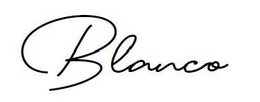
The Trademark Examining Attorney refused registration under Section 2(d) of the Trademark Act, citing a likelihood of confusion with the mark BLANCO LABEL. The cited mark is registered in standard characters, with the word "LABEL" disclaimed, for a variety of clothing items including shirts, pants, sweatpants, jeans, sweatshirts, bandanas, hats, shoes, socks, and other apparel.
Following a final refusal, the applicant appealed to the Trademark Trial and Appeal Board.
How the Board Analyzed the DuPont Factors
DuPont #2: Similarity or Dissimilarity of the Goods
The applicant’s goods included hats, pants, shirts, shorts, socks, collared shirts, polo shirts, t-shirts, and tops. The registrant’s goods included shirts, pants, sweatpants, jeans, sweatshirts, bandanas, hats, shoes, socks, vests, and various other clothing items.
The Board noted that the Applicant made no argument regarding the relatedness of the goods. Upon comparison, the Board found that the goods were identical in part, specifically identifying hats, pants, shirts, and socks as overlapping items.
The Examining Attorney supplemented the record with twenty third-party registrations to show that the types of clothing listed by both parties often emanate from a single source. These registrations demonstrated that hats, pants, shorts, and tops are frequently offered by the same entities that offer swimwear, pajamas, or scarves. While the Board acknowledged this evidence, it ultimately determined that because the goods were identical in part, further evidence regarding the relatedness of other clothing items was unnecessary to reach its conclusion.
DuPont #3: Similarity or Dissimilarity of Trade Channels
Similar to its analysis of the goods, the applicant offered no specific argument regarding trade channels. The Board determined that the classes of consumers for both the applicant’s and the registrant’s clothing items consisted of the general public. These were characterized as ubiquitous, everyday products offered to all potential consumers.
Because the goods are identical in part, the Board presumed that these identical goods travel through the same channels of trade to the same class of purchasers. The Examining Attorney provided evidence from various retailer websites to demonstrate that identical and related clothing items are offered in overlapping channels. Again, the Board found this evidence supportive but unnecessary given the legal presumption arising from the identity of the goods.
DuPont #1: Similarity or Dissimilarity of the Marks
The Board’s most extensive analysis involved the first DuPont factor, which requires a comparison of the marks in their entireties regarding appearance, sound, connotation, and commercial impression. The Board emphasized that the test is not a side-by-side comparison, but whether the marks create a similar overall commercial impression on an average purchaser with a fallible memory.
In its evaluation of the marks BLANCO (stylized) and BLANCO LABEL, the Board first identified the dominant portion of the cited mark. It concluded that "BLANCO" was the dominant element because "LABEL" had been disclaimed as descriptive wording. The Board also noted that "BLANCO" is the initial word in the cited mark, making it more likely to be the element remembered by consumers.
The Board found that the applicant’s mark was entirely subsumed within the cited mark. The Board observed that where one mark is incorporated within another, a finding of likelihood of confusion is frequent. Regarding the shared term "BLANCO," the marks were found to be identical in appearance, sound, and connotation.
The applicant raised several counter-arguments against the similarity of the marks, which the Board addressed individually:
- Stylization versus Standard Characters: The applicant argued that the stylized cursive font of its mark distinguished it from the "standard upper-case font" of the cited mark. The Board rejected this, noting that the cited mark is in standard character form, meaning it is not limited to any particular display. The Board explained that under Trademark Rule 2.52(a), a standard character mark may be presented in any size, font, or style, including the exact stylized font used by the applicant. Consequently, the registrant would be entitled to depict its mark in the same cursive style as the applicant's mark.
- Phonetic Differences and Syllable Counting: The applicant contended that the marks were phonetically distinct, describing its mark as a two-syllable, stand-alone term and the cited mark as a four-syllable "compound expression." The applicant argued these differences were vital in the apparel industry where brand names are often spoken. The Board dismissed this reasoning, reiterating the principle that purchasers do not count letters or syllables when reacting to marks in the marketplace. Moreover, consumers have a penchant for shortening marks. The Board found it likely that consumers would shorten "BLANCO LABEL" to simply "BLANCO" in verbal communication and recollection, further increasing the likelihood of confusion.
- Connotation and Meaning: The applicant argued that "BLANCO" could serve as a surname or geographic reference, creating a "luxurious brand identity," whereas "BLANCO LABEL" suggested a "product line" or "collection." The Board disagreed, finding that "BLANCO" in both marks could evoke the same meanings and that the applicant’s mark could easily be perceived merely as a variant of the registrant’s mark.
The Board concluded that the presence of the disclaimed word "LABEL" was insufficient to overcome the overwhelming similarities in appearance, sound, and commercial impression created by the shared dominant term "BLANCO."
Board’s Decision
The TTAB affirmed the refusal to register the applicant’s mark under Section 2(d) of the Trademark Act. The Board held that the similarity of the marks, the identity of the goods in part, and the overlapping trade channels collectively favored a finding that confusion was likely.
This is a straightforward Section 2(d) refusal affirmance by the TTAB. What surprises me is that it actually went to appeal.
Obviously, I am not privy to the conversation between counsel and client. But I wonder if this is a case where the client was so in love with their mark that the cost of appeal was worth the meager possibility of a reversal. Sure, anything is technically possible. But in this case, the cards were heavily stacked against the applicant.