Lack of "Something More" Leads to 2(d) Reversal
DAILY HARVEST CAFE // DAILY HARVEST

• Core Issue: Whether "cafe and restaurant services" are sufficiently related to various pre-packaged food products and online retail store services featuring food to create a likelihood of confusion under Section 2(d) when the marks both share the dominant "DAILY HARVEST" literal element.
To successfully establish a likelihood of confusion between food products and restaurant services, the Examining Attorney must provide substantial evidence meeting the "something more" requirement. Practitioners can defeat a Section 2(d) refusal by demonstrating that third-party evidence of overlap is de minimis rather than indicative of a broad industry practice.
Background
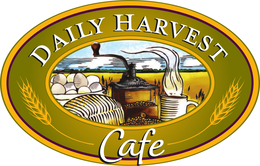
The Applicant, Daily Harvest Café, filed Application Serial No. 98269684, seeking registration on the Principal Register for a composite mark for "cafe and restaurant services" in International Class 43. The mark consists of the words "DAILY HARVEST CAFE" contained within an oval circle, accompanied by images of wheat, eggs, bread, and a cup of coffee. The word "CAFE" was disclaimed.
The Examining Attorney refused registration under Trademark Act Section 2(d), citing five registrations (4657785, 5690150, 6135865, 6719577 , 7026236) owned by Daily Harvest, Inc. for the standard character mark DAILY HARVEST. These cited registrations cover an extensive array of food and beverage products, including pre-packaged food items, as well as online retail services. After the Examining Attorney issued a final refusal, the Applicant appealed to the Trademark Trial and Appeal Board (TTAB).
How the Board Analyzed the DuPont Factors
DuPont #1: Similarity of the Marks
The first DuPont factor requires an assessment of the marks in their entireties regarding appearance, sound, connotation, and commercial impression. The Board noted that the cited registrations are for the mark in standard characters. In contrast, the applied-for mark is a composite mark featuring "DAILY HARVEST CAFE" in stylized fonts within an oval, surrounded by blades of wheat, a loaf of bread, eggs, a steaming cup of coffee, and a coffee grinder.
Regarding the dominant elements, the Board reiterated the general rule that words are more significant than design elements in a composite mark. In this instance, the Board found that "DAILY HARVEST" constitutes the dominant portion of the Applicant’s mark. The term "CAFE" was deemed less significant because it is a generic, disclaimed term for the services.
The Board dismissed the Applicant's argument that the design elements were the salient feature, stating that the graphics actually reinforced the literal words "DAILY HARVEST" because wheat and eggs are items that are "harvested and served daily at a restaurant or café."
Ultimately, the Board concluded that because the Applicant’s mark subsumes the entirety of the registered DAILY HARVEST marks, adding only generic wording and a reinforcing design, the marks are overall similar in sound, appearance, connotation, and commercial impression. The Board emphasized that the word portion is particularly vital in the restaurant industry, where consumers heavily rely on word-of-mouth recommendations.
DuPont #2: Similarity of the Goods and Services
The Board acknowledged that while confusion is often found when similar marks are used for both food products and restaurant services, there is no per se rule. Instead, the USPTO must show "something more" than the mere fact that restaurants serve food.
Prepacked foods
The Examining Attorney attempted to meet this burden by providing evidence from four third-party websites: Panera.com, Amysdrivethru.com (along with Amys.com), Bobevans.com, and Starbucks.com. These websites were submitted to show that some entities provide both restaurant services and prepackaged foods. For instance, the evidence showed that Starbucks offers prepackaged snacks and coffee beans alongside its café services, while Panera Bread offers "Panera at Home" prepackaged soups and breads in grocery stores.
In addition, the Examining Attorney included screenshots from both the Applicant's and the Registrant's websites, arguing that they demonstrate that both parties actually sell identical goods in retail food establishments.
The Board, however, found this evidence lacking. It pointed out that this de minimis showing of only three or four examples is hardly "numerous or substantial," as required by law, especially in a country with a massive number of restaurants and cafés. At best, the Board noted:
"[the evidence] suggests a general similarity between the type of food packaged by Registrant and some of the items available on the menu in Applicant’s restaurant and café."
Consequently, the Board concluded that the degree of overlap between the sources of restaurant services and prepackaged foods was insufficient to meet the "something more" requirement.
On-line retail store services
The same third-party websites were evaluated to determine whether the Registrant's online retail store services overlap with the Applicant's restaurant and café services. Again, the Board found that the evidence was lacking and failed to demonstrate that the relevant services are related.
As a result, the second DuPont factor weighed heavily against a finding of a likelihood of confusion.
DuPont #3: Similarity of the Trade Channels and Classes of Purchasers
The Applicant argued that consumers selecting packaged goods in a supermarket exercise different considerations than café patrons. However, the Board rejected this argument as improper because it relied on extrinsic evidence of actual marketplace use rather than the explicit language in the application and registrations.
Because neither the Application nor the Cited Registrations contained specific limitations regarding trade channels or classes of purchasers, the Board presumed that the goods and services travel in all normal channels of trade to all normal consumers. That said, the Board noted that the Examining Attorney’s website evidence offered only a limited suggestion of overlap in these channels and consumer bases. Ultimately, these factors weighed only slightly in favor of a likelihood of confusion.
Board’s Decision
Ultimately, the Board reversed the refusal to register Daily Harvest Café’s composite mark. While the Board found that the marks themselves are similar and that their trade channels and consumers slightly overlap, these findings were eclipsed by the Examining Attorney's failure to show that the goods and services are legally related.
Without a substantial showing that consumers would expect a single source to provide both café services and the wide variety of prepackaged food products listed in the cited registrations, the Board concluded that there was no likelihood of confusion.
Earlier in my practice, before I began to appreciate the nuances of the DuPont analysis, I used to be somewhat self-defeating when hit with these types of refusals. I would look at a conflict where the literal elements matched perfectly, or where the goods and services seemed obviously related (like food and restaurants) and immediately view it as an uphill battle. There were times I even counseled clients away from the risk entirely.
While I still provide a realistic risk analysis today, I’ve learned to look past surface-level similarities and focus instead on a fundamental question: Has the USPTO actually met its specific burden of proof?
We see this all the time: an examiner pulls a few screenshots from multi-billion-dollar global conglomerates and uses them to argue that a widespread consumer expectation exists. But as the Board rightly pointed out in this case, a de minimis showing is hardly "numerous or substantial" in a country with such a massive number of restaurants and cafés.
If you believe the Examining Attorney is being overly general and dismissive, push back. Force them to prove that a real, widespread consumer expectation exists, rather than letting them coast on a few cherry-picked websites.
Leverage data
One powerful way to force this issue is to introduce hard data on the relevant industry. In this case, the Board took judicial notice that there is a massive number of restaurants and cafés in the United States. How large exactly? Well, according to the U.S. Census Bureau's County Business Patterns data, there are over 600,000 employer restaurant establishments (NAICS 72251) nationwide. And that is using a fairly narrow and conservative definition. Some broader industry reports place that number well over 1 million.
The number does not have to be precise down to the single digit. The point is simply that instead of hoping for judicial notice, why not introduce concrete evidence and put the USPTO's evidence into perspective, highlighting just how insignificant a few random screenshots really are.
We all know that pure legal arguments in an Office Action response rarely move the needle on their own. Next time you are facing this hurdle, try adding macroeconomic data to the file. Forcing the Examining Attorney to look at three or four websites against a backdrop of nearly a million businesses can completely change the persuasiveness of your response.