Using Additional Elements to Imbue New Meaning Into Shared Initialisms
NORTHWEST NWA AIRLINE || NWA

• Core Issue: Likelihood of confusion analysis under DuPont factors, focusing on whether the addition of NORTHWEST AIRLINES and aviation-themed design elements to the initialism NWA creates a sufficiently distinct commercial impression to avoid confusion with a standard-character NWA mark used for identical clothing items.
Background
The Applicant, Malibu Shirts, Inc., filed an application to register a composite mark on the Principal Register for use in connection with "Hats; Sweatshirts; T-shirts" in International Class 25.
The mark features an aviation aesthetic. It consists of the words NORTHWEST and AIRLINE written within a dark outer ring that circles the central initialism, NWA. To complete the logo, stylized wings extend from both the left and right sides of the central circle.
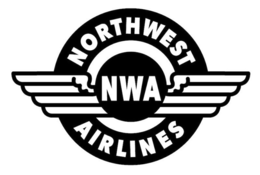
The Trademark Examining Attorney refused registration under Section 2(d) of the Trademark Act, citing a likelihood of confusion with two existing registrations owned by different entities.
- Registration No. 7666875: NWA in standard characters for "Clothing, namely, shirts, t-shirts, sweatpants, sweatshirts, track suits, hooded sweatshirts, long sleeve shirts, tank tops, hats, beanies, baseball caps, bandanas," in International Class 25.
- Registration No. 4675580: N.W.A. in standard characters for "Clothing, namely, shirts, tops, and headwear," also in International Class 25.
Following a final refusal and a denied request for reconsideration, the Applicant appealed to the Trademark Trial and Appeal Board.
How the Board Analyzed the DuPont Factors
The Board focused its analysis on NWA because the goods were legally identical to those in the N.W.A. registration and the NWA mark was slightly more similar to the Applicant’s proposed mark. The Board stipulated that if no likelihood of confusion existed regarding the NWA mark, none could exist regarding the N.W.A. mark.
DuPont #2: Similarity or Dissimilarity of the Goods
The Board began by assessing the relatedness of the goods, comparing the identifications in the application against those in the cited registration. It found that the Applicant's identified goods were identical to the clothing items listed in the registration; specifically, "t-shirts," "sweatshirts," and "hats" appeared verbatim in both. Under established legal standards, when the goods are identical, the degree of similarity between the marks required to support a finding of likelihood of confusion is reduced. Consequently, this factor weighed heavily in favor of a likelihood of confusion.
DuPont #3: Established, Likely-to-Continue Channels of Trade and Classes of Consumers
Given that the goods in the application and the cited registration were identical, the Board applied the presumption that the relevant trade channels and classes of purchasers were also the same. Because neither the Applicant’s nor the Registrant’s identifications contained limitations or restrictions regarding specific trade channels or consumer groups, the Board presumed that the goods would travel through the same ordinary channels of commerce to the same potential purchasers.
The Applicant attempted to argue that the trade channels were, in fact, distinct. Specifically, the Applicant contended that its goods were distributed through channels tied to the airline industry, such as airport retail stores, airline-operated online shops, in-flight catalogs, and aviation-themed promotional events. Furthermore, the Applicant asserted that its marketing targeted "primarily airline passengers, aviation enthusiasts, and consumers seeking branded travel apparel or memorabilia associated with the airline’s identity." In contrast, the Applicant characterized the Registrant’s trade channels as general retail and fashion-oriented outlets associated with the National Wrestling Alliance.
The Board dismissed these arguments as unavailing. It emphasized that a DuPont analysis must be based strictly on the goods as they are identified in the application and the registration. Because the Applicant's purported marketing restrictions were not reflected in the actual text of the identifications, the Board could not consider extrinsic evidence of the Applicant's real-world marketplace practices. Consequently, this factor also weighed in favor of a likelihood of confusion.
DuPont #1: Similarity or Dissimilarity of the Marks
The Board spent the majority of its analysis on the first DuPont factor, comparing the marks in their entireties as to appearance, sound, connotation, and commercial impression. The Board noted that while marks must be compared as a whole, it is permissible to accord more weight to a particular feature if there is a rational basis for doing so.
Dominance
The Examining Attorney argued that the marks shared the same dominant acronym, NWA. Specifically, the Examiner asserted that the acronym was prominently centered within its own space, creating a unique and separable impression. The Examiner further argued that the additional elements in the Applicant’s mark, namely the surrounding text and the wing design, failed to distinguish the two marks, noting that literal wording generally predominates over design elements and that the Registrant's mark lacked any extra elements to help consumers differentiate between them.
Conversely, the Applicant countered that its mark differed materially in both content and appearance. It argued that the phrase "NORTHWEST AIRLINES" dominated the visual impression and introduced a distinct structure that completely altered the viewer’s perception.
The Board was not persuaded that NWA was the dominant element. Instead, the Board found that NWA is defined by, and thus conceptually tied to, the other wording that surrounds it: NORTHWEST AIRLINES.
Ultimately, the Board was not persuaded that NWA was the dominant element. Instead, the Board found that NWA is defined by, and thus conceptually tied to, NORTHWEST AIRLINES, which surrounds it.
Sound
Regarding sound, the Applicant noted that its mark required the speaker to articulate a complete company name alongside an abbreviation, whereas the cited mark consisted of a mere three-letter sequence.
The Board agreed with the Applicant, finding that the additional literal elements missing from the Registrant's mark set the two marks apart both visually and aurally. As the Board noted in footnote 18:
"Consumers considering Applicant’s mark in its entirety would likely verbalize it as 'NORTHWEST AIRLINES NWA' or 'NWA NORTHWEST AIRLINES.' Also possible, but less likely, is 'NORTHWEST NWA AIRLINES.' All of these verbalizations differ in sound as compared to 'NWA” alone.'
Connotation & Commercial Impression
Most importantly, the Applicant argued that the inclusion of "NORTHWEST AIRLINES" directed consumers to interpret the mark as evoking an aviation entity, creating a markedly different overall appearance and meaning.
The Board agreed with the Applicant. It found that the sole similarity between the marks was the shared initialism "NWA." The Board reasoned that the impression created by the Applicant's mark was that "NWA" serves as an acronym or abbreviation for "NORTHWEST AIRLINES."
Furthermore, the Board criticized the Examining Attorney’s dismissal of the design elements. It noted that the wing-like design and the word "AIRLINES" reinforced the aviation connotation, making the goods appear to be promotional or commemorative merchandise tied to an airline. The Board found no evidence that consumers would perceive a similar connotation when viewing the cited mark NWA alone.
The Board also addressed the Examining Attorney’s argument regarding standard-character marks. While acknowledging that a standard-character registration like the Registrant's NWA could be displayed in any font or style, the Board concluded that even if it were displayed in a font identical to the Applicant’s mark, the Applicant’s additional literal and design elements created a distinct commercial impression that was simply not encompassed by the standard character claim.
To illustrate this point, the Board contrasted this case with a previous appeal, In re Comexa Ltda.:
"There, the registered mark consisted solely of the term AMAZON... That term, by itself, may conjure thoughts of the Amazon jungle or region. Thus, adding a depiction of a parrot (a common jungle bird) to the term AMAZON in the applicant’s mark actually reinforced the impression already present in AMAZON alone (citation omitted)."
Whereas the parrot design in Comexa failed to serve as a differentiating element, the Board concluded that the additional design elements and text in the Applicant’s mark actively create a specific meaning for consumers, a meaning that is entirely absent when NWA appears by itself.
Board’s Decision
The TTAB ultimately reversed the refusal to register the Applicant’s mark under Section 2(d). Although the Board acknowledged that the goods were identical and presumed to travel through the same trade channels (the second and third DuPont factors), it concluded that the substantial dissimilarity of the marks in sound, appearance, meaning, and commercial impression (the first DuPont factor) ultimately outweighed the other considerations.
The Board highlighted that while the degree of similarity required to find confusion is reduced when the underlying goods are identical, the differences between these specific marks were significant enough to make confusion highly unlikely. Consequently, the Board held that the first DuPont factor was dispositive in this instance, successfully overcoming the Examining Attorney’s refusal.
A standard character mark, especially a three-character initialism, is incredibly versatile for brand marketing. It's sharp and succinct. It can be deployed in various colors, fonts, and sizes. But it's also incredibly "vanilla" without all the marketing activities behind it. This is exactly the way forward exposed by the Board when analyzing this case.
On its own, NWA is essentially a blank slate with no singular, dominant commercial impression. It could stand for a dozen different things, yet it stood for none under the first DuPont factor. This created an opportunity for the Applicant to argue entirely different connotations and commercial impressions—even a different appearance, sound, and structure. They used additional wording ("NORTHWEST AIRLINES") and an added aviation design element (the wings) to completely redefine the context of those three letters. The moment you surround "NWA" with airlines and wings, those letters are instantly imbued with an entirely new meaning.
This strategy works incredibly well if the shared portion of a mark lacks a singular, dominant meaning on its own, allowing your additional elements to redefine the whole mark. On the other hand, this strategy is far less effective if your added elements merely reinforce a meaning that is already explicitly present in the cited mark, as seen in the Comexa (AMAZON + parrot) example.
The next time you're facing a refusal against a shared initialism, focus solely on the cumulative effect of your client’s additional elements. Point out that the extra words ensure the marks sound vastly different when spoken aloud, entirely breaking the phonetic similarity, or that the additional elements alter and infuse the mark with a completely different connotation. The goal is to show that, when viewed in their entireties, the two marks tell completely different stories to the average consumer. One is a blank slate; the other tells a highly specific story.